
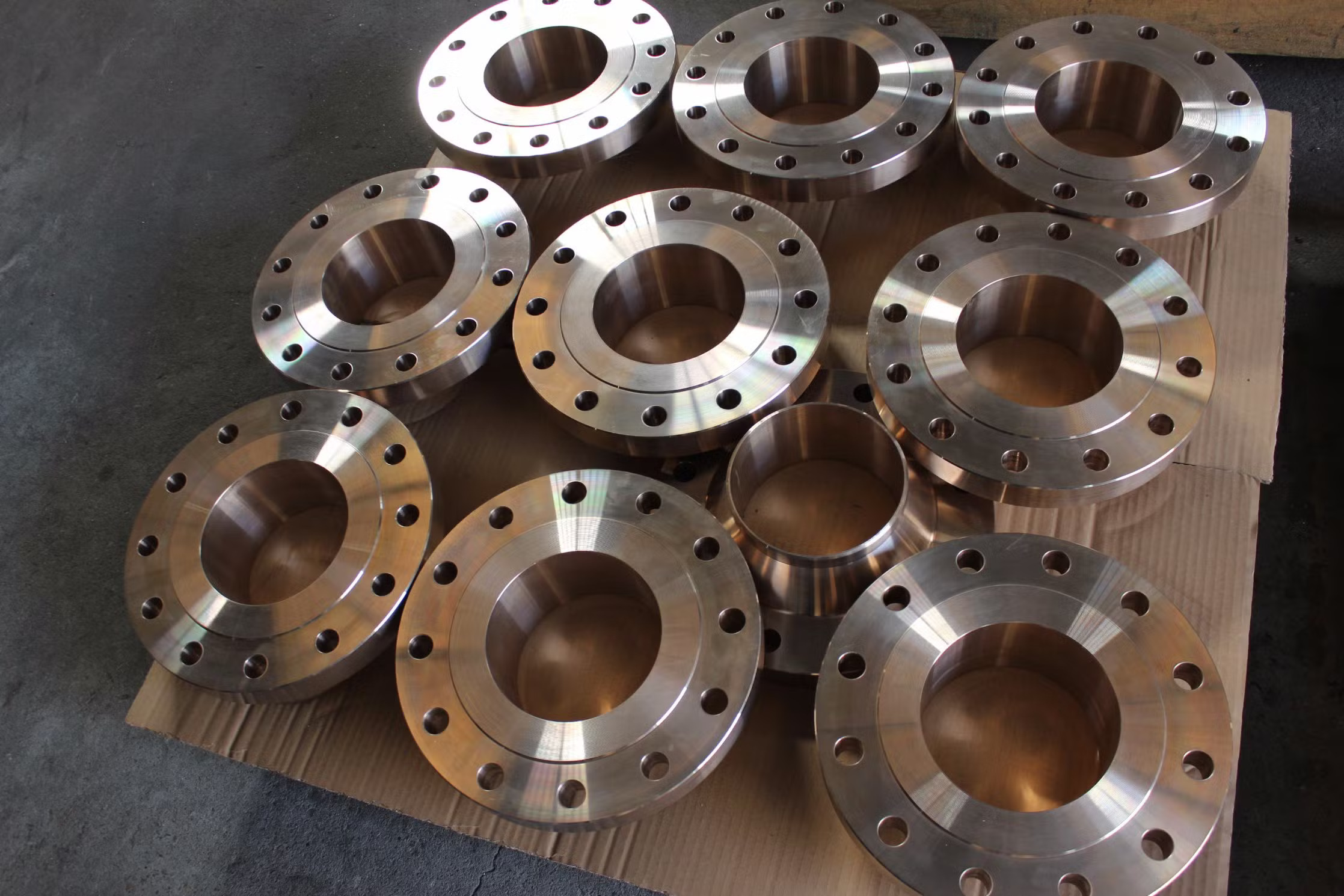
Introduction to Nickel Alloy Flanges and Copper Nickel Flanges
What Are Flanges?
Flanges are essential components in piping systems that connect pipes, valves, pumps, and other equipment. They allow for easy maintenance, cleaning, and inspection. Think of them as the strong joints holding your piping systems together—vital for safety and efficiency.
Why Alloys Matter in Flanges
Not all flanges are made the same. Different environments and media (like chemicals, water, or gases) require different materials. This is where nickel and copper-nickel alloys come into play—these alloys are engineered to withstand harsh industrial conditions.
Overview of Nickel-Based Flanges
Nickel alloy flanges are known for their excellent resistance to heat, corrosion, and oxidation. They’re used in industries where durability under pressure and temperature is a must.
Types of Nickel Alloy Flanges
Nickel 200 Flanges
Nickel 200 is a commercially pure wrought nickel known for its superior corrosion resistance in alkaline media. It performs well in caustic environments and is often used in food processing, synthetic fiber production, and marine industries.
- Temperature Resistance: Up to 600°C
- Corrosion Resistance: Excellent in alkalis and acidic environments
Nickel 201 Flanges
Nickel 201 is similar to Nickel 200 but with lower carbon content, making it more resistant to graphitization at high temperatures. It’s ideal for chemical processing and electrical applications.
- Application: Heat exchangers, pressure vessels
- Special Feature: Maintains strength at elevated temperatures
SS316 and Nickel 200 are two of the most commonly used materials in high-performance nickel alloy flanges.
Common Applications of Nickel Flanges
- Petrochemical plants
- Heat exchangers
- Marine engineering
- Aerospace components
- Battery production facilities
Understanding Copper Nickel Flanges
What is Cupro Nickel?
Cupro Nickel is an alloy of copper and nickel, usually in the 70/30 or 90/10 ratio. It’s particularly prized for its corrosion resistance in seawater.
Key Features and Composition
- Composition: 90% copper and 10% nickel (or 70/30 for enhanced strength)
- Strength: Moderate mechanical strength
- Weldability: Excellent
- Corrosion Resistance: Superior in saltwater
Copper Nickel Blind Flanges
These are designed to close the end of piping systems. Blind flanges are crucial in allowing pressure testing or sealing off sections of pipelines.
- Best For: Marine and offshore industries
Types of Copper Nickel Flanges
Copper Nickel 70/30 Flanges
The 70/30 alloy offers enhanced strength and corrosion resistance, suitable for more aggressive seawater environments.
Copper Nickel 90/10 Flanges
More ductile and easier to fabricate, 90/10 flanges are commonly used in shipbuilding and power plants.
Cupro Nickel Slip-on and Weld Neck Flanges
- Slip-On Flanges: Easy to install, cost-effective
- Weld Neck Flanges: High strength, used in high-pressure applications
Key Differences Between Nickel & Copper Nickel Flanges
Corrosion Resistance
Both alloys offer excellent resistance, but copper nickel shines in marine environments, while nickel excels in chemical and high-temperature setups.
Strength & Toughness
Nickel alloys are stronger and more durable in high-pressure environments compared to copper nickel flanges.
Cost and Availability
Copper nickel tends to be more cost-effective, while nickel alloys are priced higher due to their enhanced features and application in critical sectors.
Applications Across Industries
In chemical plants, nickel alloy flanges outperform carbon steel due to their longer lifecycle in harsh media.
Marine and Offshore
Cupro nickel flanges are a go-to choice for shipbuilding, offshore platforms, and desalination plants due to their saltwater resistance.
Petrochemical and Refining
Nickel alloy flanges hold up well in acid processing units and high-temperature reactors.
Power Generation
Flanges made from nickel alloys are used in turbines and steam pipelines.
Heat Exchangers and Condensers
Nickel 201 is preferred for its thermal conductivity and corrosion protection.
Benefits of Using Nickel Alloy Flanges
Resistance to Oxidation and Scaling
Nickel alloys perform well even at temperatures over 1000°C.
Longevity and Maintenance
They last for decades without significant wear and tear, reducing the need for frequent maintenance.
High Temperature and Pressure Tolerance
Used in critical systems where failure is not an option—such as nuclear or aerospace industries.
Benefits of Using Copper Nickel Flanges
Ideal for Seawater Systems
Biofouling and corrosion are minimized, ensuring long service life.
Ease of Fabrication
Can be easily welded, machined, and fitted into existing systems.
Biofouling Resistance
The copper content prevents the growth of marine organisms on submerged components.
Choosing the Right Flange for Your Project
Factors to Consider
- Operating temperature and pressure
- Media being transported (e.g., chemicals, seawater)
- Installation environment (marine, underground, etc.)
- Budget constraints
Expert Consultation at Unifit Metalloys
Still unsure? Our team at UnifitMetalloys.com offers personalized guidance and material selection support.
Why Choose Unifit Metalloys for Your Flange Needs
Certified Materials
We provide flanges with international certifications such as ASTM, ASME, DIN, and EN standards.
Global Delivery and Inventory
Serving clients across 40+ countries with fast shipping and ready stock.
Custom Solutions
Need a special size or alloy mix? We fabricate to order.
Unifit Metalloys manufactures custom nickel alloy flanges for global clients, delivering precision and reliability
Final Thoughts
Whether you’re building an offshore oil platform or installing pipelines in a chemical plant, selecting the right flange material can make all the difference. Nickel alloy flanges offer unbeatable strength and heat resistance, while copper nickel flanges are the clear winner in marine settings. At Unifit Metalloys, we’re committed to providing high-quality, cost-effective flange solutions tailored to your needs.
FAQs
Q1: Are nickel alloy flanges suitable for food industry applications?
Yes, especially Nickel 200, which is known for its purity and corrosion resistance in food processing environments.
Q2: Can copper nickel flanges be used in freshwater systems?
Absolutely! Though designed for saltwater, they’re also effective in freshwater environments.
Q3: What certifications do Unifit Metalloys flanges come with?
We provide flanges with ASTM, ASME, EN, and ISO certifications depending on client requirements.
Q4: How do I choose between 70/30 and 90/10 copper nickel flanges?
Choose 70/30 for more aggressive environments. 90/10 is ideal for general marine and industrial use.
Q5: Does Unifit Metalloys offer custom-sized flanges?
Yes, we specialize in custom fabrications as per project needs and international standards.