
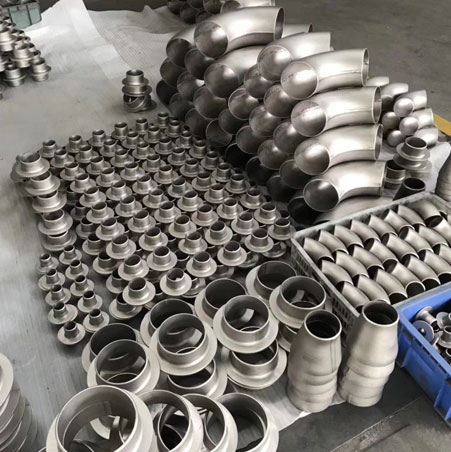
If you’re searching for the most reliable, corrosion-resistant, and durable pipe connections, stainless steel 304 fittings are your best bet. They are the workhorses of many industries—from dairy to petrochemical, from pharmaceuticals to water treatment. But finding a trustworthy stainless steel pipe fittings supplier can be tricky. That’s where this guide comes in handy.
Let’s walk you through everything you need to know, from benefits to types, from standards to where you can get the best ones—yes, we’ll tell you why Unifit Metalloys should be your go-to manufacturer and exporter.
Benefits of Stainless Steel 304 Fittings
1. Excellent Corrosion Resistance
Thanks to its high chromium and nickel content, Stainless Steel 304 Fittings hold up incredibly well against rust and corrosion, especially in moist or chemical-heavy environments.
2. Cost-Effective and Durable
SS 304 is not just affordable; it also has a long lifespan. That’s a win-win when planning long-term industrial infrastructure.
3. Versatility Across Applications
From transporting milk in dairy plants to handling acids in chemical plants, Stainless Steel 304 Fittings are highly adaptable.
Types of Stainless Steel 304 Fittings
Let’s break it down by type—you’ve got more choices than you might think!
• Elbows (45°, 90°, 180°)
Used to change the direction of the pipe flow. These come in different angles and radius options depending on your setup.
• Tees and Crosses
Great for branching pipe flows in three or four directions. Useful in complex plumbing and processing systems.
• Reducers (Concentric & Eccentric)
Need to connect pipes of different diameters? You’ll need these!
• Couplings and Nipples
For joining two pipes securely. A common sight in water treatment and gas pipelines.
• Caps and Stub Ends
Used to close off piping ends or for easy dismantling and inspection.
• Tri Clover Fittings
Ideal for hygienic applications like pharmaceuticals and beverages. Easy to clean, easy to assemble.
• Dairy Fittings
Specifically designed for the dairy industry, maintaining cleanliness and easy flow.
Applications of Stainless Steel 304 Fittings
Stainless Steel 304 Fittings are practically everywhere. Let’s explore a few common sectors.
• Food and Beverage Industry
Thanks to its non-reactive and rust-resistant nature, it’s perfect for clean and safe food processing.
• Pharmaceutical and Dairy
SS 304 fittings help maintain sterile environments and prevent contamination.
• Chemical and Petrochemical
Able to handle high pressures and corrosive fluids without degrading.
• Water Treatment Plants
Their strength and corrosion resistance make them ideal for handling wastewater and potable water.
How to Choose Stainless Steel Pipe Fittings Suppliers
Finding the right supplier isn’t just about pricing—it’s about trust.
• Quality Certifications and Standards
Look for certifications like ISO 9001, PED, and compliance with ASTM/ASME norms.
• Manufacturing Capabilities
Choose suppliers that can produce high-volume and custom-made fittings.
• Customization & Delivery Times
Speed and flexibility are key, especially in large projects.
• Customer Service and Support
Good support today can save you from major headaches tomorrow.
Why Buy from Unifit Metalloys
1. Premium Quality with Precision Engineering
We don’t just follow standards—we set them. Every fitting is inspected to the core.
2. Wide Inventory with Global Shipping
From Mumbai to Manchester, we ship anywhere and everywhere.
3. Custom Fabrication for Complex Needs
Have an unusual requirement? We’ve got the team and tech to handle it.
4. Serving Across Industries with Trust
Trusted by oil & gas, pharmaceuticals, dairy, and petrochemical majors globally.
Common Standards for SS Fittings
• ASTM A403 WP304 & WP304L
Stainless steel fittings like ASTM A403 WP304 comply with ASTM International standards, ensuring global quality benchmarks.
• ASME, ANSI, DIN & ISO Standards
We manufacture to meet every local and international code.
• Compliance and Testing
Each batch is hydro-tested, PMI-checked, and fully traceable.
Stainless Steel 304 vs 316 – Quick Comparison
• Chemical Composition
304 contains 18% chromium and 8% nickel. 316 includes molybdenum for extra corrosion resistance.
• Corrosion Resistance
316 performs better in saltwater, but 304 is perfect for most industrial uses.
• Cost Differences
304 is more budget-friendly, with only a slight tradeoff in corrosion resistance.
Maintenance Tips for Stainless Steel 304 Fittings
• Cleaning and Inspection Routines
Use mild detergents. Avoid chlorides!
• Preventing Surface Rust
Store fittings in dry environments. Use passivation if needed.
• Storage and Handling Guidelines
Keep them in covered, ventilated areas. Don’t drag them—scratches can compromise performance.
Sourcing Fittings Near You vs Global Suppliers
• Pros & Cons of Local vs International Purchase
Local = quick turnaround. International = better pricing and variety.
• How Unifit Bridges the Gap
We maintain ready stock and global logistics to deliver the best of both worlds.
Final Thoughts
Stainless steel 304 fittings are the cornerstone of modern piping systems. Whether you’re setting up a new plant or upgrading old pipelines, sourcing quality fittings is non-negotiable. With Unifit Metalloys, you’re not just buying a product—you’re building a partnership based on trust, quality, and performance.
FAQs
1. What is the pressure rating of SS 304 pipe fittings?
Typically, they can handle up to 3000 psi depending on size and thickness.
2. Can SS 304 fittings be used in seawater applications?
They’re not ideal for saltwater; SS 316 is more suitable due to molybdenum.
3. How to check the quality of stainless steel fittings?
Look for test certificates, PMI reports, and check surface finish and welding quality.
4. Do you offer custom-sized pipe fittings?
Yes, Unifit Metalloys specializes in both standard and non-standard fabrication.
5. How to get a quotation from Unifit Metalloys?
Just visit www.unifitmetalloys.com or drop us an email with your requirements—we respond within 24 hours.