
Are you searching for reliable weld neck flanges manufacturers who deliver uncompromised quality and customization? You’re in the right place. In this guide, we’ll walk you through everything you need to know about weld neck flanges—from types and materials to top manufacturing practices and how to pick the best supplier. If you’ve ever felt overwhelmed by flange options or confused about what makes one better than another, you’re not alone.
Weld neck flanges aren’t just another pipe component. Think of them as the backbone of piping systems in oil, gas, chemical, and power industries. When performance, pressure handling, and safety are non-negotiable, choosing the right weld neck flanges manufacturers becomes critical.
1. What is a Weld Neck Flange?
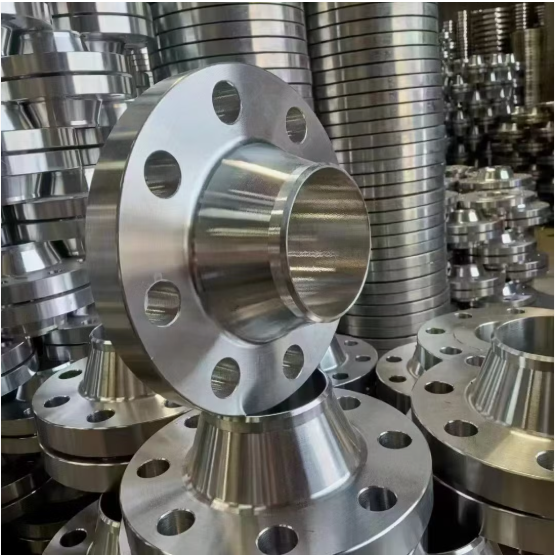
A weld neck flange is a type of flange designed to be welded to the pipe, making it ideal for high-pressure applications. It features a long tapered hub, providing structural strength and stress distribution.
Think of it as the bridge connecting critical piping with maximum support.
2. Why Choose Weld Neck Flanges?
- Excellent pressure and temperature resistance
- Smooth flow and less turbulence
- Ideal for hostile environments (chemical, petrochemical, etc.)
- Long service life
3. Materials Used in Weld Neck Flanges
Top weld neck flanges manufacturers offer a wide range of materials:
- Stainless Steel (SS)
- Carbon Steel (CS)
- Alloy Steel
- Duplex & Super Duplex Steel
Each material suits specific conditions, from corrosion resistance to pressure durability.
4. Types of Weld Neck Flanges
- Standard Weld Neck Flange
- Long Weld Neck Flange
- Orifice Weld Neck Flange
- Reducing Weld Neck Flange
These variants cater to specific engineering demands.
5. Stainless Steel Weld Neck Flanges
Stainless weld neck flanges are best for corrosive environments. They’re widely used in marine, food processing, and chemical applications.
6. Carbon Steel Weld Neck Flanges
Carbon steel weld neck flanges offer excellent strength and affordability. Ideal for industrial sectors that demand high durability without heavy corrosion resistance.
7. WNRF Flanges vs. Other Types
WNRF (Weld Neck Raised Face) flanges are better at sealing and pressure handling compared to slip-on or socket weld types. They also reduce the risk of leaks.
8. Key Applications
- Oil & Gas pipelines
- Chemical refineries
- Power plants
- Shipbuilding
- High-pressure vessels
9. How to Select the Right Manufacturer
- Check for certifications like ISO, PED, IBR
- Look for custom solutions
- Ask about in-house testing & inspection
- Confirm material traceability and mill test reports
10. Quality Certifications to Look For
Reputable manufacturers carry:
- ISO 9001
- PED Certification
- IBR Approval
- Third-Party Inspection (TPI) reports
11. Custom Weld Neck Flange Solutions
Need a custom 3-inch weld neck flange or a special material like duplex stainless steel? Look for a manufacturer offering custom machining and fabrication.
12. Common Sizes: 3-Inch & More
Sizes range from 1/2 inch to 48 inches, but 3-inch weld neck flanges are among the most commonly used in mid-range pressure pipelines.
13. Flat Face vs. Raised Face
- Flat Face Flanges are used where flanges are bolted to cast iron or fiberglass.
- Raised Face Flanges provide better sealing and are more common in process piping.
14. Final Thoughts
Choosing the right weld neck flanges manufacturers can drastically improve the safety, durability, and efficiency of your piping systems. Whether you’re after stainless steel weld neck flanges, carbon steel, or custom long weld neck designs, make sure your supplier offers certified quality, customization, and reliable support.
FAQs
Q1: What is a weld neck flange used for?
A weld neck flange is used to connect pipes in high-pressure, high-temperature applications, ensuring leak-proof performance.
Q2: What does WNRF stand for?
WNRF means Weld Neck Raised Face, indicating the raised sealing surface design.
Q3: Are stainless steel weld neck flanges better than carbon steel?
It depends. Stainless steel offers corrosion resistance, while carbon steel is more economical and durable for non-corrosive environments.
Q4: What sizes are available for weld neck flanges?
Standard sizes range from 1/2 inch to 48 inches, with custom sizes available.
Q5: How do I verify the quality of a flange manufacturer?
Look for ISO, PED, and IBR certifications, material test reports, and third-party inspections.